Automotive Lens Sourcing for Chongqing International Optoelectronics Expo Buyers with CHANCCTV
FUZHOU, FUJIAN, CHINA, August 13, 2026 /EINPresswire.com/ -- The modern vehicle camera system is not a single specification; it is a coordinated network divided by specific functional roles, including the front view, backup, dashcam, 360° surround view, and advanced driver-assistance systems (ADAS). Because each of these installation positions demands a radically different field of view, resolution standard, and environmental tolerance, relying on off-the-shelf, generalized optics often introduces dangerous blind spots or calibration failures. To mitigate these risks and ensure that every sensor performs its intended role, engineers rely on a dedicated Custom Automotive Lens Manufacturer that can provide both standardized models and specialized modifications matched to the vehicle's functional imaging requirements.
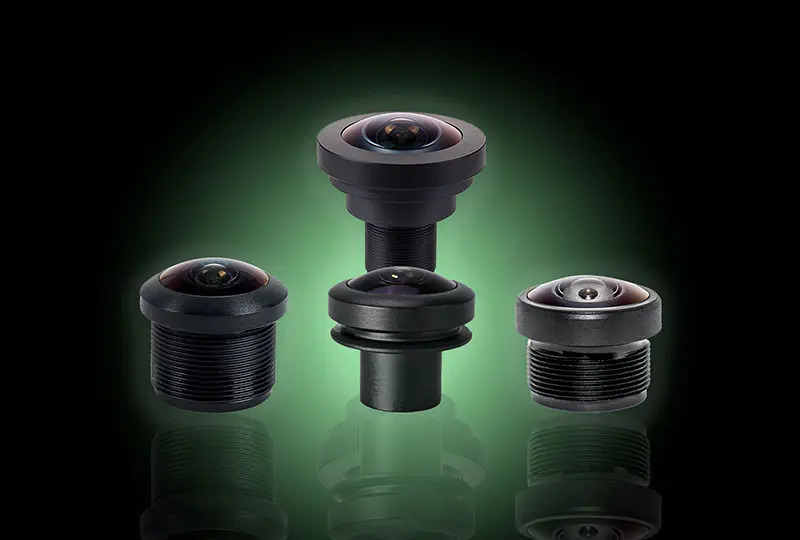
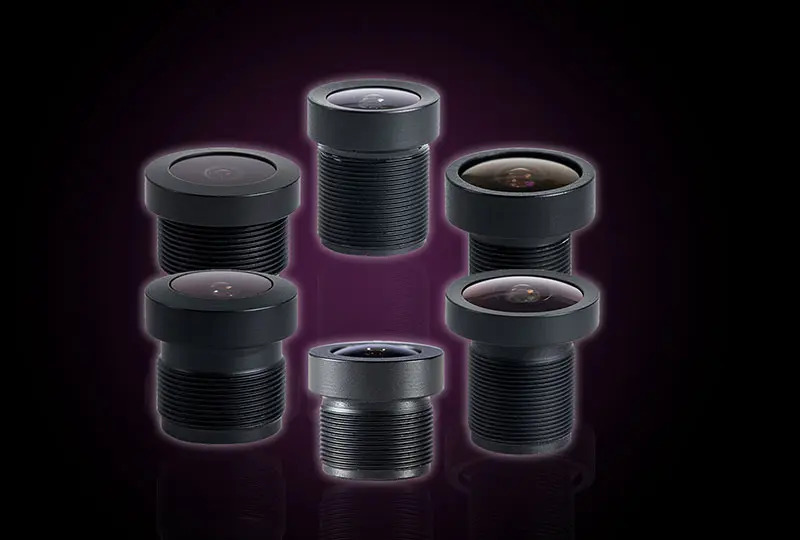
Addressing these automotive imaging demands requires a comprehensive product portfolio. The CHANCCTV automotive lens lineup covers all five of these core view categories, offering a wide array of resolution options, adaptable M8, M10, and M12 mounts, precise focal lengths, and wide-FOV configurations. For sourcing professionals, supply chain managers, and engineering teams attending the upcoming Chongqing International Optoelectronics Expo in July 2026, productive procurement communication must begin not with a generic request for standard lenses, but with a detailed breakdown of the camera position and the overarching system requirements. By leveraging CHANCCTV's structured product categories, verifiable historical customization records, and flexible sample policies, buyers can execute early-stage project screening and translate engineering challenges into verifiable optical specifications.
Map Automotive Lenses to Vehicle Camera Functions
Effective automotive lens sourcing must be split fundamentally by system function rather than attempting to force all vehicle cameras into a single, compromised specification. The optical requirements for a front-view camera are distinct from those of a backup camera, just as a dashcam's continuous recording needs differ from the panoramic coverage of a 360° surround view or the algorithmic precision demanded by ADAS. Each unique application imposes its own constraints on the required field of view, the necessary resolution density, and the physical installation location within the vehicle's architecture.
To support this function-first approach, the CHANCCTV automotive lens product portfolio covers all five of these critical applications. Within these categorized series, automotive engineers can select from high-performance models that provide 5–16 MP resolutions, versatile M8, M10, and M12 mount options, and calibrated focal ranges spanning 2.0–3.57 mm. The distinction in the final application dictates the optical design: a 360° surround-view system inherently requires a significantly larger horizontal field of view to stitch together a panoramic image, while front-view and ADAS configurations prioritize target recognition distance, granular imaging details, and the rigorous system calibration conditions necessary for autonomous safety interventions.
For buyers evaluating specific capabilities, the performance metrics define the application matching. The portfolio supports front-view applications requiring 5–16 MP clarity, specialized ADAS lenses maintaining 5 MP resolution, and selected surround-view models engineered to deliver an expansive HFOV of 194°–235° without compromising vital edge data.
Core Optical Parameters for Automotive Sourcing
The evaluation and procurement of an automotive lens are determined not by a single headline number, but by an interplay of critical optical parameters: the sensor size, resolution, mount type, focal length, field of view, aperture, IR cut characteristics, and the anticipated operating environment. Each of these interconnected factors must be aligned with the camera's functional mandate. For instance, backup and surround-view systems are primarily tasked with covering close-proximity blind spots to prevent low-speed collisions, whereas a dashcam is optimized for continuous, reliable imaging across varying ambient conditions and unexpected mechanical shocks.
ADAS requirements represent the most demanding tier of automotive optics. These specialized lenses must exhibit absolute coordination with algorithmic recognition software, demanding exact calibration and integration with the entire vehicle camera system. Furthermore, low-light and nighttime driving environments drastically amplify the impact of the lens's aperture size, its IR performance, and its capacity for stray light control. In these challenging scenarios, a single megapixel specification is insufficient to represent the entire system's imaging capability. True reliability requires an optical solution where flare is minimized, contrast is preserved, and sensor data remains actionable regardless of harsh oncoming headlights or deep shadows.
Custom Development Experience in Vehicle Imaging
When standard catalog parameters cannot meet the structural or visual demands of a new vehicle platform, proven customization experience becomes the most critical supplier qualification. CHANCCTV brings a documented history of automotive optical development, highlighted by a 2012 milestone project to engineer a custom super-wide-angle lens designed for a commercial truck rearview application for a U.S. company. This historical project demonstrates a fundamental reality of automotive sourcing: successful lens customization requires matching the field of view and the physical structural size with the actual vehicle perspective, rather than merely selecting an approximate focal length from a standard list.
Since its founding in 2010, the company has continuously expanded its foundational optical expertise, actively growing its automotive, wide-angle, low-distortion, and machine-vision product lines. This continuous progression provides the adjacent technological foundation necessary for developing sophisticated, multi-camera vehicle systems. By drawing on deep experience across diverse optical disciplines, the engineering team can anticipate integration challenges and design customized solutions that maintain optical integrity across the entire vehicle perimeter.
Prototype, Inspection, and Supply Planning
Transitioning an automotive lens project from the drawing board to the assembly line requires rigorous validation. Before mass production can commence, the project must successfully navigate sample imaging tests, mechanical assembly trials, and exhaustive environmental verification. Attempting to bypass these crucial steps by directly equating standard catalog parameters with the final, installed vehicle application results is a profound procurement risk that frequently leads to costly late-stage failures and system malfunctions.
To support prototyping and mitigate this risk, CHANCCTV maintains responsive sample and supply policies tailored to automotive engineering cycles. The facility accepts one-piece sample orders, allowing engineering teams to validate optical performance with minimal upfront commitment. For standard stock lenses, the sample lead time is approximately three days, rapidly accelerating the initial testing phase. As projects successfully scale toward mass production, the transparent 1,000-lens lead time of 15–20 days provides automotive supply chain managers with a reliable baseline for scheduling pilot runs and early-stage manufacturing.
Beyond timeline predictability, automotive buyers require concrete assurance of manufacturing quality. The dedicated Inspection Workshop and Processing Plant offer visual, verifiable evidence of the facility's production capabilities and stringent testing environments. However, while these advanced facilities establish the baseline of quality, buyers must ensure that specific requirements for vibration resistance, thermal cycling, humidity tolerance, and component traceability are explicitly defined within the project's technical specifications to guarantee long-term automotive reliability.
Chongqing Expo Buyer Qualification Checklist
For procurement professionals and automotive engineers engaging with suppliers at the Chongqing International Optoelectronics Expo, unstructured inquiries yield generic responses. A professional Request for Quotation (RFQ) must be highly specific, encompassing the intended camera position, sensor model, required resolution, mount specification, precise FOV, target recognition distance, IR requirements, operating temperature range, physical housing constraints, and projected annual demand. Approaching procurement with this level of detail ensures that conversations move immediately from general capabilities to actionable project planning.
In this specialized sourcing environment, establishing the functional camera position must precede any model comparison. Only after the definitive parameter boundaries for the front view, backup, surround view, dashcam, or ADAS applications are clearly established can a supplier accurately evaluate standard models, propose viable custom options, and define the scope of sample verification. By leveraging its comprehensive automotive lens portfolio and custom support capabilities, CHANCCTV enters the project evaluation phase equipped to address these stringent demands, understanding that final supplier qualification ultimately rests on the successful delivery of required testing documentation and full-system verification results.
Drawing upon an optical product development foundation established in 2010, CHANCCTV integrates targeted product series, deep application expertise, flexible sample policies, and custom engineering support to create a definitive procurement foundation for automotive buyers. This end-to-end capability transforms the complexities of specification screening and sample validation into a streamlined, reliable sourcing process. Guided by a commitment to develop sharper lenses, create ideal solutions, and provide customized services to realize innovation, the company stands ready to support the next generation of vehicle imaging systems. To initiate your project evaluation, submit your specific sensor, mount, FOV, working distance, filter, environmental, and quantity requirements through https://www.opticslens.com/ and engage directly with our specialized engineering consultation team.
Addressing these automotive imaging demands requires a comprehensive product portfolio. The CHANCCTV automotive lens lineup covers all five of these core view categories, offering a wide array of resolution options, adaptable M8, M10, and M12 mounts, precise focal lengths, and wide-FOV configurations. For sourcing professionals, supply chain managers, and engineering teams attending the upcoming Chongqing International Optoelectronics Expo in July 2026, productive procurement communication must begin not with a generic request for standard lenses, but with a detailed breakdown of the camera position and the overarching system requirements. By leveraging CHANCCTV's structured product categories, verifiable historical customization records, and flexible sample policies, buyers can execute early-stage project screening and translate engineering challenges into verifiable optical specifications.
Map Automotive Lenses to Vehicle Camera Functions
Effective automotive lens sourcing must be split fundamentally by system function rather than attempting to force all vehicle cameras into a single, compromised specification. The optical requirements for a front-view camera are distinct from those of a backup camera, just as a dashcam's continuous recording needs differ from the panoramic coverage of a 360° surround view or the algorithmic precision demanded by ADAS. Each unique application imposes its own constraints on the required field of view, the necessary resolution density, and the physical installation location within the vehicle's architecture.
To support this function-first approach, the CHANCCTV automotive lens product portfolio covers all five of these critical applications. Within these categorized series, automotive engineers can select from high-performance models that provide 5–16 MP resolutions, versatile M8, M10, and M12 mount options, and calibrated focal ranges spanning 2.0–3.57 mm. The distinction in the final application dictates the optical design: a 360° surround-view system inherently requires a significantly larger horizontal field of view to stitch together a panoramic image, while front-view and ADAS configurations prioritize target recognition distance, granular imaging details, and the rigorous system calibration conditions necessary for autonomous safety interventions.
For buyers evaluating specific capabilities, the performance metrics define the application matching. The portfolio supports front-view applications requiring 5–16 MP clarity, specialized ADAS lenses maintaining 5 MP resolution, and selected surround-view models engineered to deliver an expansive HFOV of 194°–235° without compromising vital edge data.
Core Optical Parameters for Automotive Sourcing
The evaluation and procurement of an automotive lens are determined not by a single headline number, but by an interplay of critical optical parameters: the sensor size, resolution, mount type, focal length, field of view, aperture, IR cut characteristics, and the anticipated operating environment. Each of these interconnected factors must be aligned with the camera's functional mandate. For instance, backup and surround-view systems are primarily tasked with covering close-proximity blind spots to prevent low-speed collisions, whereas a dashcam is optimized for continuous, reliable imaging across varying ambient conditions and unexpected mechanical shocks.
ADAS requirements represent the most demanding tier of automotive optics. These specialized lenses must exhibit absolute coordination with algorithmic recognition software, demanding exact calibration and integration with the entire vehicle camera system. Furthermore, low-light and nighttime driving environments drastically amplify the impact of the lens's aperture size, its IR performance, and its capacity for stray light control. In these challenging scenarios, a single megapixel specification is insufficient to represent the entire system's imaging capability. True reliability requires an optical solution where flare is minimized, contrast is preserved, and sensor data remains actionable regardless of harsh oncoming headlights or deep shadows.
Custom Development Experience in Vehicle Imaging
When standard catalog parameters cannot meet the structural or visual demands of a new vehicle platform, proven customization experience becomes the most critical supplier qualification. CHANCCTV brings a documented history of automotive optical development, highlighted by a 2012 milestone project to engineer a custom super-wide-angle lens designed for a commercial truck rearview application for a U.S. company. This historical project demonstrates a fundamental reality of automotive sourcing: successful lens customization requires matching the field of view and the physical structural size with the actual vehicle perspective, rather than merely selecting an approximate focal length from a standard list.
Since its founding in 2010, the company has continuously expanded its foundational optical expertise, actively growing its automotive, wide-angle, low-distortion, and machine-vision product lines. This continuous progression provides the adjacent technological foundation necessary for developing sophisticated, multi-camera vehicle systems. By drawing on deep experience across diverse optical disciplines, the engineering team can anticipate integration challenges and design customized solutions that maintain optical integrity across the entire vehicle perimeter.
Prototype, Inspection, and Supply Planning
Transitioning an automotive lens project from the drawing board to the assembly line requires rigorous validation. Before mass production can commence, the project must successfully navigate sample imaging tests, mechanical assembly trials, and exhaustive environmental verification. Attempting to bypass these crucial steps by directly equating standard catalog parameters with the final, installed vehicle application results is a profound procurement risk that frequently leads to costly late-stage failures and system malfunctions.
To support prototyping and mitigate this risk, CHANCCTV maintains responsive sample and supply policies tailored to automotive engineering cycles. The facility accepts one-piece sample orders, allowing engineering teams to validate optical performance with minimal upfront commitment. For standard stock lenses, the sample lead time is approximately three days, rapidly accelerating the initial testing phase. As projects successfully scale toward mass production, the transparent 1,000-lens lead time of 15–20 days provides automotive supply chain managers with a reliable baseline for scheduling pilot runs and early-stage manufacturing.
Beyond timeline predictability, automotive buyers require concrete assurance of manufacturing quality. The dedicated Inspection Workshop and Processing Plant offer visual, verifiable evidence of the facility's production capabilities and stringent testing environments. However, while these advanced facilities establish the baseline of quality, buyers must ensure that specific requirements for vibration resistance, thermal cycling, humidity tolerance, and component traceability are explicitly defined within the project's technical specifications to guarantee long-term automotive reliability.
Chongqing Expo Buyer Qualification Checklist
For procurement professionals and automotive engineers engaging with suppliers at the Chongqing International Optoelectronics Expo, unstructured inquiries yield generic responses. A professional Request for Quotation (RFQ) must be highly specific, encompassing the intended camera position, sensor model, required resolution, mount specification, precise FOV, target recognition distance, IR requirements, operating temperature range, physical housing constraints, and projected annual demand. Approaching procurement with this level of detail ensures that conversations move immediately from general capabilities to actionable project planning.
In this specialized sourcing environment, establishing the functional camera position must precede any model comparison. Only after the definitive parameter boundaries for the front view, backup, surround view, dashcam, or ADAS applications are clearly established can a supplier accurately evaluate standard models, propose viable custom options, and define the scope of sample verification. By leveraging its comprehensive automotive lens portfolio and custom support capabilities, CHANCCTV enters the project evaluation phase equipped to address these stringent demands, understanding that final supplier qualification ultimately rests on the successful delivery of required testing documentation and full-system verification results.
Drawing upon an optical product development foundation established in 2010, CHANCCTV integrates targeted product series, deep application expertise, flexible sample policies, and custom engineering support to create a definitive procurement foundation for automotive buyers. This end-to-end capability transforms the complexities of specification screening and sample validation into a streamlined, reliable sourcing process. Guided by a commitment to develop sharper lenses, create ideal solutions, and provide customized services to realize innovation, the company stands ready to support the next generation of vehicle imaging systems. To initiate your project evaluation, submit your specific sensor, mount, FOV, working distance, filter, environmental, and quantity requirements through https://www.opticslens.com/ and engage directly with our specialized engineering consultation team.
Fuzhou ChuangAn Optics Co., Ltd.
CHANCCTV
email us here
Visit us on social media:
Instagram
Facebook
YouTube
Other
Legal Disclaimer:
EIN Presswire provides this news content "as is" without warranty of any kind. We do not accept any responsibility or liability for the accuracy, content, images, videos, licenses, completeness, legality, or reliability of the information contained in this article. If you have any complaints or copyright issues related to this article, kindly contact the author above.